
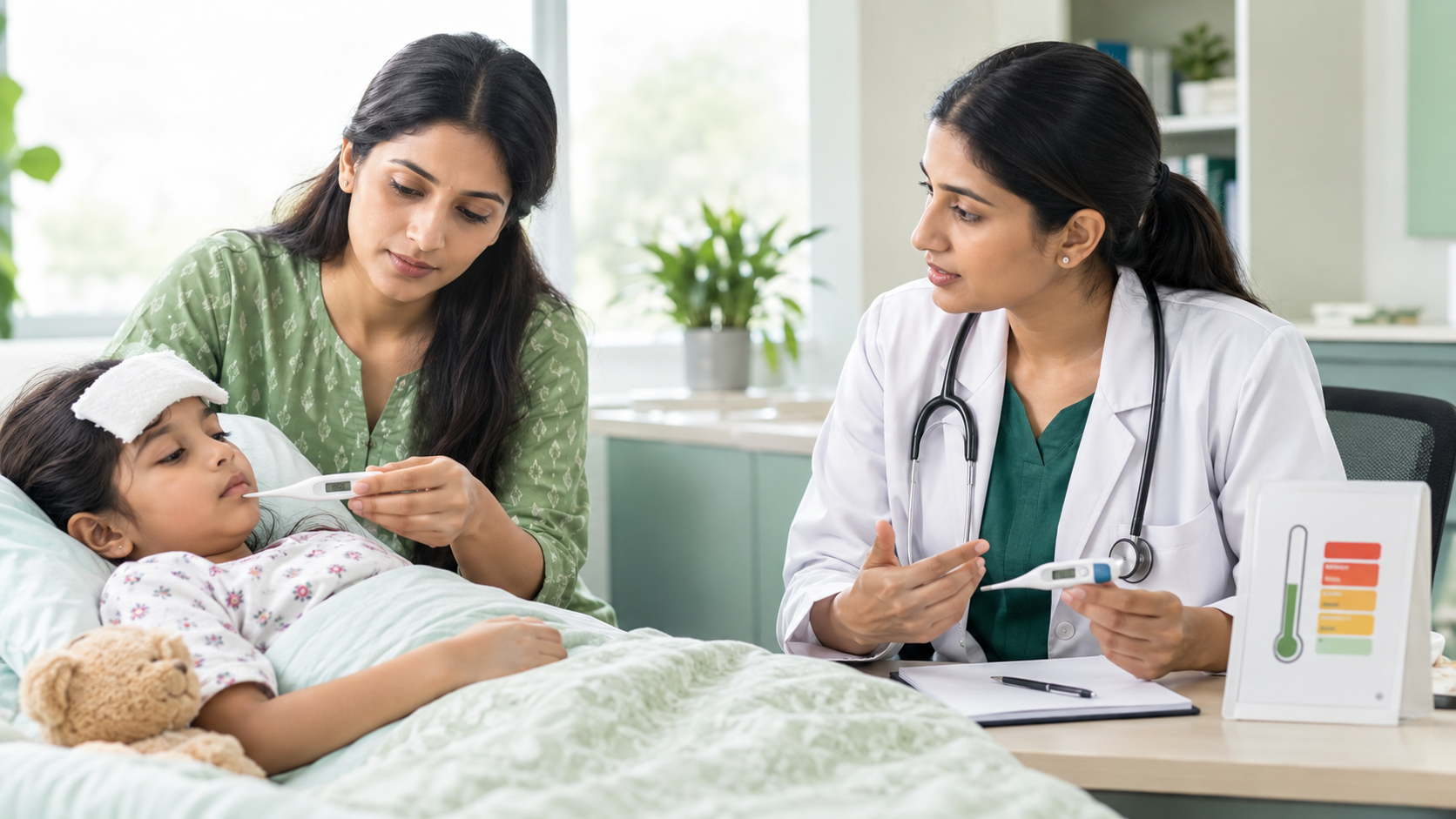
Fever is one of the most common reasons parents worry about their child. A warm forehead or a high number on the thermometer can be frightening, but fever itself is usually a sign that the body is fighting an infection.
The important thing is not just how high the temperature is, but also the child’s age, symptoms, behaviour, and overall condition.
What Temperature Counts as a Fever?
A temperature of 100.4°F (38°C) or higher is generally considered a fever.
Fever can occur with common viral infections such as colds and flu, but it can also accompany bacterial infections or other illnesses. Therefore, the thermometer reading should always be considered along with how the child is behaving and feeling.
Is Every Fever Dangerous?
No. Many fevers in children are caused by viral infections and settle with rest, fluids and appropriate care.
A child who has a fever but is:
- Alert and responding normally
- Drinking fluids
- Passing urine normally
- Breathing comfortably
- Playing or becoming more active when the fever comes down
may not have an emergency, even if the temperature is moderately high.
However, some situations require prompt medical evaluation.
Understanding Fever Levels
Around 100.4°F–102°F (38°C–38.9°C)
This is a low-to-moderate fever.
In many cases, especially in older children who otherwise look well, it can be monitored at home. Encourage fluids, allow the child to rest and monitor symptoms.
The goal is not always to bring the temperature back to normal. Comfort and hydration are more important.
Around 102°F–104°F (38.9°C–40°C)
This is a higher fever and deserves closer observation.
A high temperature does not automatically mean that the illness is dangerous. However, parents should pay attention to the child’s behaviour, hydration, breathing and other symptoms.
If the fever persists, keeps returning, or the child appears increasingly unwell, contact a pediatrician.
104°F (40°C) or Higher
A temperature of 104°F (40°C) or above is considered a very high fever.
It does not necessarily mean that a serious illness is present, but it warrants prompt medical assessment, particularly if the child looks unwell or has other concerning symptoms.
Age Matters: Babies Need Extra Attention
Fever in very young babies should never be ignored.
A baby younger than 3 months with a temperature of 100.4°F (38°C) or higher needs urgent medical evaluation.
Young infants can become seriously ill without showing many obvious symptoms, so parents should seek medical advice promptly rather than waiting for the fever to settle on its own.
Warning Signs That Need Immediate Medical Attention
Regardless of the exact temperature, seek urgent medical care if a child with fever has any of these warning signs:
Difficulty Breathing
Fast or laboured breathing, struggling to breathe, grunting, or bluish lips or face can indicate a serious problem.
Seizure
A seizure associated with fever requires medical assessment, especially if it is the child’s first seizure, lasts more than a few minutes, or the child does not recover normally afterward.
Extreme Sleepiness or Difficulty Waking
If your child is unusually difficult to wake, confused, very weak, or not responding normally, seek immediate medical help.
Severe Dehydration
Watch for very little urine, a dry mouth, no tears when crying, inability to drink, or unusual weakness.
Stiff Neck or Severe Headache
Fever accompanied by a stiff neck, severe headache, unusual sensitivity to light, or significant changes in behaviour can be a medical emergency.
Rash That Does Not Fade With Pressure
A rapidly developing rash, particularly one that does not blanch when pressed, should be assessed urgently.
Persistent Vomiting
Repeated vomiting combined with fever can lead to dehydration and may sometimes indicate a more serious infection.
Child Looks Seriously Ill
Trust your instincts. If your child looks significantly different from usual, is continuously crying, is unusually irritable, or simply appears very unwell, seek medical advice even if the thermometer reading does not seem extremely high.
What Can Parents Do at Home?
For a child who is otherwise comfortable and does not have warning signs:
Keep them hydrated: Offer frequent small amounts of water, breast milk, formula or other age-appropriate fluids.
Let them rest: Fever can make children tired, so allow plenty of rest.
Dress them comfortably: Avoid wrapping the child in heavy blankets or excessive clothing.
Monitor the temperature: Use a reliable thermometer rather than relying only on touch.
Use fever medicine appropriately: Paracetamol/acetaminophen or ibuprofen may be appropriate for some children, but the correct medicine and dose depend on the child’s age, weight and medical situation. Follow your pediatrician’s advice and the product instructions. Never give aspirin to children unless specifically directed by a healthcare professional.
What Parents Should Avoid
Do not use ice-cold baths or alcohol rubs to try to reduce a child’s fever. These can cause discomfort or other problems.
Also, avoid giving antibiotics without medical advice. Most childhood fevers are not caused by bacteria, and unnecessary antibiotics can cause side effects and contribute to antibiotic resistance.
The Most Important Rule: Look at the Child, Not Just the Number
A fever of 103°F in a child who is drinking, interacting and breathing comfortably may be less concerning than a lower fever in a child who is difficult to wake, dehydrated or struggling to breathe.
The thermometer gives you a number. Your child’s behaviour and symptoms give you the bigger picture.
When in Doubt, Get Medical Advice
If you are unsure about your child’s fever, particularly when the child is very young, the fever is persistent, or concerning symptoms are present, contact a pediatrician.
Never delay emergency medical care because you are waiting for the temperature to become higher.
Early medical evaluation can make a significant difference when a child is seriously unwell.