
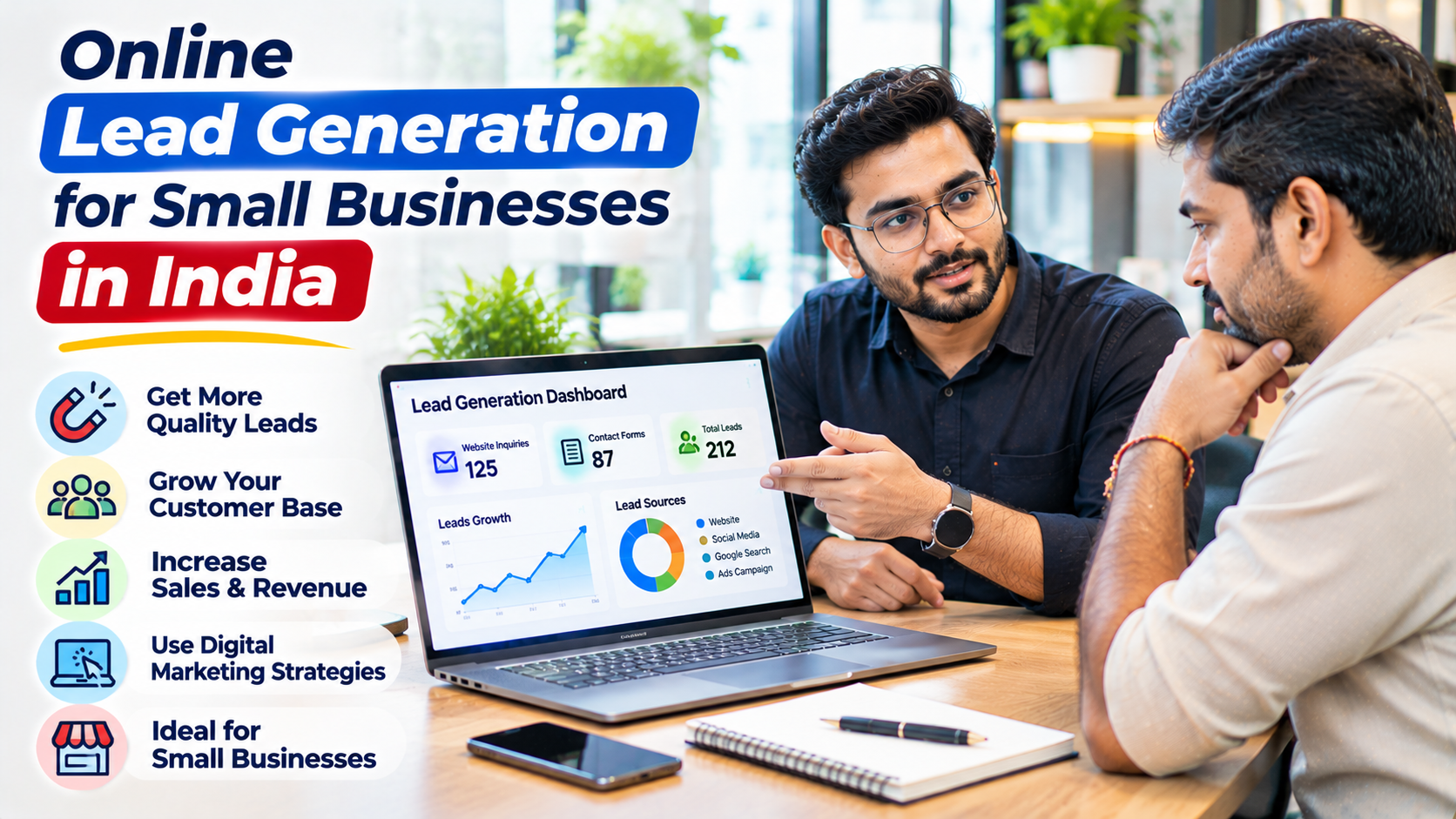
Generating a consistent flow of potential customers is one of the biggest challenges for small businesses. Whether you run a local shop, service company, consultancy, or startup, finding people who are genuinely interested in your products or services is essential for business growth.
Online lead generation helps small businesses connect with potential customers through digital channels such as search engines, social media, websites, email, and online advertising. With the right strategy, businesses can attract relevant prospects, build trust, and convert inquiries into paying customers without relying entirely on traditional marketing.
For small businesses in Sonipat and nearby areas, online lead generation can help reach customers in Model Town Sonipat, Sector 14 Sonipat, Murthal, Ganaur, Gohana, Kharkhoda, and the wider Delhi NCR region.
This guide explains practical ways to generate leads online for a small business in India, how to choose the right channels, and how to turn website visitors and social media users into genuine business inquiries.
What Is Online Lead Generation?
Online lead generation is the process of attracting potential customers through digital channels and collecting their contact details or inquiries so your business can follow up.
A lead may be someone who:
- Fills out a contact form on your website.
- Calls your business after finding it on Google.
- Sends a message through WhatsApp.
- Requests a product quote.
- Registers for a webinar or consultation.
- Downloads a useful guide after submitting their details.
Not every lead is ready to buy immediately. Some people are researching options, while others are comparing prices or looking for a specific service. Your goal is to attract relevant prospects and guide them toward taking the next step.
1. Build a Website That Converts Visitors Into Leads
Your website is often the central destination for your online marketing activities. It should clearly explain what your business offers and make it easy for visitors to contact you.
A lead-generation website should include:
- A clear description of your products or services.
- A headline that communicates your value.
- Contact information that is easy to find.
- A visible call-to-action (CTA).
- A simple inquiry or quote request form.
- Customer reviews or testimonials, when genuine and available.
- Mobile-friendly design and fast loading.
- Relevant service pages and helpful content.
For example, a local service business in Sonipat can create a dedicated page explaining its services, the locations it serves, and how customers can request a consultation.
Avoid overwhelming visitors with too many options. A focused page with one clear next step often makes it easier for users to take action.
2. Use Search Engine Optimization (SEO)
SEO helps your website appear in organic search results when people look for products or services related to your business.
For small businesses, SEO can attract users who already have a specific need. Someone searching for a service in their area may be closer to making a purchase than someone casually browsing social media.
Conduct Keyword Research
Identify the search terms your potential customers use. Consider:
- Your main products or services.
- Customer questions.
- Location-based searches.
- Specific problems your business solves.
- Long-tail keywords with clear intent.
For example, a business serving Sonipat might target relevant phrases such as “digital marketing services in Sonipat” or “website designer near Model Town Sonipat,” depending on its actual services.
Use keyword research tools such as Google Keyword Planner, Google Trends, and Google Search Console to discover and evaluate relevant search terms.
Create Helpful Website Content
Publish useful content that answers questions your audience is asking. Blog posts, service guides, FAQs, and comparison articles can help attract relevant visitors.
Content should be accurate, original, and written for people rather than created only to repeat keywords.
Optimize Your Service Pages
Each important service should have a dedicated page that explains:
- What the service includes.
- Who it is for.
- The benefits and limitations.
- How the process works.
- How to request more information.
SEO takes time, but consistent optimization can help build long-term visibility.
3. Optimize Your Google Business Profile
For businesses that serve local customers, Google Business Profile can be an important source of inquiries.
A complete and accurate profile can help people discover your business through Google Search and Maps.
To improve your profile:
- Use your correct business name.
- Select the most relevant business categories.
- Add accurate contact details and business hours.
- Provide a clear description of your services.
- Upload genuine photos of your business.
- Keep service and location information updated.
- Respond professionally to customer reviews.
- Publish relevant updates when appropriate.
Businesses serving Sonipat, Murthal, Ganaur, Gohana, and Kharkhoda should make sure their profile accurately reflects their real service area.
Do not create fake locations or use misleading business information. Local visibility depends on relevance, distance, and other factors, and optimization cannot guarantee a specific ranking.
4. Generate Leads Through Social Media Marketing
Social media platforms can help small businesses reach potential customers, demonstrate expertise, and build relationships.
Choose platforms based on your audience and business type:
- Instagram: Useful for visual products, local services, reels, and customer engagement.
- Facebook: Can support local communities, business pages, and advertising.
- LinkedIn: Useful for B2B services, professional networking, and business decision-makers.
- YouTube: Helpful for tutorials, demonstrations, reviews, and educational content.
Share Content That Encourages Inquiries
Create content that answers customer questions and shows how your business can help.
Examples include:
- Product demonstrations.
- Before-and-after examples, where appropriate and genuine.
- Customer FAQs.
- Educational tips.
- Behind-the-scenes content.
- Service explanations.
- Testimonials shared with permission.
Include a clear CTA, such as “Request a quote,” “Message us for details,” or “Book a consultation.”
Avoid posting only promotional content. Useful information and consistent engagement can help build trust over time.
5. Use WhatsApp for Lead Generation and Follow-Up
WhatsApp is widely used in India and can be a convenient channel for customer inquiries and follow-up.
Businesses can use WhatsApp Business to provide information, respond to questions, and manage conversations with potential customers.
Useful practices include:
- Add a WhatsApp contact button to your website.
- Include a WhatsApp link on relevant social media profiles.
- Set up a professional business profile.
- Use quick replies for common questions.
- Organize conversations with labels.
- Share relevant catalogs or service details.
- Respond promptly during business hours.
Make sure customers understand what they are contacting you about. Avoid sending unsolicited bulk messages, and respect requests to stop receiving communications.
6. Run Paid Advertising Campaigns
Paid advertising can help businesses reach potential customers more quickly than relying only on organic channels. However, advertising requires a budget and ongoing optimization.
Google Ads
Google Ads can reach people actively searching for specific products or services.
For example, a business may target relevant service-related searches in Sonipat or nearby areas. Search campaigns can be useful when customers already know what they need.
To improve campaign performance:
- Select relevant keywords.
- Use location targeting carefully.
- Write clear and accurate ad copy.
- Send users to a relevant landing page.
- Track calls, form submissions, and other conversions.
- Review search terms and exclude irrelevant traffic.
Meta Ads
Facebook and Instagram advertising can help businesses reach audiences based on available targeting options and campaign objectives.
Meta Ads may be useful for:
- Promoting offers.
- Generating inquiries through lead forms.
- Reaching local audiences.
- Retargeting eligible website visitors.
- Building awareness for new services.
Start with a manageable budget, test different creatives, and evaluate lead quality rather than focusing only on the number of leads.
7. Create Lead Magnets
A lead magnet is a useful resource offered in exchange for a visitor’s contact information.
Examples include:
- Free guides.
- Checklists.
- Templates.
- Product catalogs.
- Consultation sessions.
- Educational webinars.
- Free assessments or audits.
For example, a digital marketing agency could offer a basic website SEO checklist. A visitor who wants the resource may submit their name and email address.
A good lead magnet should solve a specific problem for your target audience. Avoid asking for unnecessary personal information.
8. Use Email Marketing to Nurture Leads
Not every prospect is ready to buy when they first contact your business. Email marketing can help you stay in touch and provide useful information while they consider their options.
A simple email sequence may include:
- Welcome email: Thank the subscriber and deliver the promised resource.
- Educational email: Share practical advice related to their interest.
- Trust-building email: Explain your process or share a genuine case study.
- Offer email: Invite the reader to request a quote, consultation, or demo.
Segment your audience when possible so that subscribers receive relevant information.
Use permission-based email practices and provide a clear way to unsubscribe.
9. Publish Blogs That Attract Potential Customers
Blogging can support lead generation by answering questions that potential customers search for online.
A useful blog strategy includes:
- Researching relevant customer questions.
- Choosing keywords based on search intent.
- Creating clear, helpful articles.
- Linking to relevant service pages.
- Adding appropriate calls-to-action.
- Updating articles when information changes.
For example, a business serving Sonipat could publish an article explaining how customers should compare providers for a particular service. The article can help readers make an informed decision and direct interested visitors to a relevant service page.
Avoid publishing large volumes of thin or repetitive content. Quality, relevance, and usefulness are more important than simply increasing the number of blog posts.
10. Build Trust With Reviews and Testimonials
Trust plays an important role in lead generation. People may hesitate to contact a business if they cannot find credible information about its services or customer experience.
You can build trust by:
- Requesting honest reviews from real customers.
- Responding professionally to feedback.
- Displaying genuine testimonials with permission.
- Sharing accurate examples of completed work.
- Explaining your process and service terms.
- Providing clear contact information.
Never purchase fake reviews or publish fabricated testimonials. Misleading claims can damage your reputation and violate platform policies.
11. Create Location-Specific Landing Pages
If your business serves multiple areas, location-specific landing pages can help visitors find relevant information.
For example, a business may serve customers across Sonipat, Murthal, Ganaur, Gohana, and Kharkhoda. Each page should explain the services available in that area and provide useful local context.
A strong location page should include:
- A clear service description.
- Accurate information about the area served.
- Relevant customer questions.
- A visible contact option.
- Unique and useful content.
Do not create dozens of nearly identical pages that only change the location name. Such pages provide little value and may create a poor user experience.
12. Improve Your Lead Capture Forms
A form should make it easy for interested visitors to contact your business.
Ask only for the information you need to respond effectively. A simple form may include:
- Name
- Email address or phone number
- Service required
- Brief description of the inquiry
Long forms can discourage users from submitting their details. For complex services, consider collecting basic information first and asking follow-up questions later.
Make sure the form works on mobile devices and clearly explains what happens after submission.
13. Track and Improve Lead Generation Performance
Tracking helps you understand which marketing channels generate useful inquiries.
Monitor metrics such as:
- Website visits
- Landing page conversion rate
- Form submissions
- Phone calls
- WhatsApp inquiries
- Cost per lead
- Lead-to-customer conversion rate
- Customer acquisition cost
Tools such as Google Analytics 4, Google Search Console, and advertising platform reports can help measure performance.
Do not evaluate campaigns only by lead volume. A channel that generates fewer but more qualified leads may provide greater business value.
Review performance regularly and use the results to improve landing pages, targeting, content, and follow-up processes.
Common Online Lead Generation Mistakes to Avoid
Small businesses should avoid these common mistakes:
- Unclear offers: Visitors cannot understand what the business provides.
- Weak calls-to-action: The next step is difficult to find.
- Slow websites: Poor performance may discourage visitors.
- Broad targeting: Campaigns attract irrelevant prospects.
- Ignoring follow-up: Interested leads may lose interest if responses are delayed.
- Buying contact lists: Unsolicited outreach can damage trust and deliver poor-quality leads.
- No tracking: Businesses cannot identify which activities are working.
- Unrealistic expectations: Results vary by industry, offer, budget, and execution.
Frequently Asked Questions
What is the best way to generate leads online for a small business?
The best approach depends on your audience and budget. A combination of a conversion-focused website, SEO, Google Business Profile, social media, and timely follow-up can provide a strong foundation.
Can a small business generate leads without paid advertising?
Yes. SEO, helpful blog content, local search optimization, social media, referrals, and email marketing can generate leads without paying for each click. These methods still require time and consistent effort.
How much should a small business spend on online lead generation?
There is no universal budget. Start with an amount your business can sustain, prioritize the channels most relevant to your customers, and increase investment when you can measure positive results.
How quickly can online lead generation produce results?
Paid campaigns may begin generating inquiries soon after launch, while SEO and content marketing generally take longer to build visibility. Actual timelines vary according to competition, budget, offer, and campaign quality.
Is online lead generation useful for local businesses in Sonipat?
Yes. Local SEO, Google Business Profile, location-specific service pages, social media, and targeted advertising can help businesses reach potential customers in Sonipat and surrounding areas.
Conclusion
Online lead generation for small businesses in India requires a clear strategy, relevant content, accessible contact options, and consistent follow-up. By combining SEO, local search, social media, paid advertising, email marketing, and conversion optimization, businesses can build a reliable process for attracting and converting potential customers.
For businesses in Sonipat, Model Town Sonipat, Murthal, Ganaur, Gohana, Kharkhoda, and the wider Delhi NCR region, the most effective strategy is one that reflects local customer needs and focuses on qualified inquiries rather than traffic alone.
Digigyapan helps businesses strengthen their online presence through digital marketing services such as SEO, content marketing, social media marketing, and website optimization. A structured marketing strategy can help your business reach relevant audiences and turn online interest into meaningful customer conversations.